Friday, October 22, 2010

Chevrolet Monte Carlo Cars The Second generation 1974 Parts 1

Monte Carlo Cars The Second generation 1974 Parts 1

Chevrolet Monte Carlo Cars
Picture Of Chevrolet Monte Carlo Cars

1974

The 1974 Monte Carlo received only minor detail changes from its 1973 predecessor, most notably a revised grille in the front and taller and slimmer vertical taillights in the rear, along with a relocated license plate and larger 5 mph (8.0 km/h) rear bumper.

The base Monte Carlo with manual transmission, standard suspension and bias-ply tires was discontinued, leaving only the "S" and "Landau" models equipped with radial-ply tires and upgraded suspensions along with standard power steering and front disc brakes.
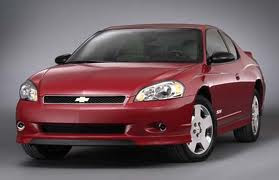
Chevrolet Monte Carlo
Picture Of Chevrolet Monte Carlo Cars


A three-speed manual transmission was listed as standard equipment on 1974 "S" and "Landau" models equipped with the standard 350 CID V8, and an automatic transmission was a required option with the larger 400 and 454 CID V8s. However, a number of sources indicate that Chevrolet built virtually all 1974 Monte Carlos with the Turbo Hydra-Matic transmission.


Read more »

Thursday, September 16, 2010

Monte Carlo Cars The Fourth generation 1981 Parts 1

Monte Carlo Cars The Fourth generation 1981 Parts 1


Monte Carlo Cars

Picture Of Monte Carlo Cars


1981

The body was restyled with the other GM mid-size formal coupes (Oldsmobile Cutlass Supreme, Pontiac Grand Prix, Buick Regal). It featured a smoother profile than the previous models and new vertical taillights similar to the 1970-1977 models. Engine offerings were carried over, including the standard 229 CID Chevrolet V6 (231 CID Buick V6 in California) an optional 267 CID V8 (not available in California), a 305 CID V8 in the base and Landau models, and a turbocharged 170 hp (130 kW) 231 CID Buick V6 in the Monte Carlo Turbo. There were a total of 3,027 Monte Carlo Turbos for 1981. This would make the Monte Carlo Turbo one of the rarest Monte Carlo's built, even rarer than the 1987 Monte Carlo SS Aerocoupe. The Monte Carlo Turbo appeared slightly different than other Monte Carlos that year because in addition to the turbo motor it also was equipped with a small hood scoop on the left side of the hood. It also had Turbo 3.8 badges with Chevrolet bowtie on the sides of the hood scoop, on the trunk lid, and on the right side of the dash. An automatic transmission, power steering and power front disc brakes were standard equipment. While this car was considered by some to be much better looking (and appeared more aerodynamic) than its Buick Regal, Pontiac Grand Prix, and Olds Cutlass cousins, only one team tried to make a go of it in NASCAR cup racing. While the big Monte Carlo was the dominant body style in the late 1970s, winning 30 or so races, the downsized (and cleaned-up) 1981 body would only take three checked flags in the 1981 and 1982 seasons when it was run.
Read more »

Sunday, July 4, 2010

Monte Carlo Cars The Second generation 1973 The End Part

Monte Carlo Cars The Second generation 1973 The End Part

Monte Carlo CarsPicture Of Monte Carlo Cars

The standard engine was a 145 (net) hp (108 kW) 350 CID (5.7 L) Turbo-Fire V8. Optional engines included a 175 (net) hp (30 kW) 350 CID V8 with a four-barrel carburetor and a four-barrel carbureted 454 CID Turbo-Jet V8 rated at 245 (net) hp (183 kW).

Monte Carlo CarsPicture Of Monte Carlo Cars

The 1973 Monte Carlo Cars was named Motor Trend's "Car of the Year", due to its new styling and emphasis on Euro-style ride and handling. The 1973 Monte Carlo Cars set a new sales record for Chevrolet, with nearly 250,000 sold for the model year.

Monte Carlo CarsPicture Of Monte Carlo Cars

The success of the Monte Carlo Cars and Pontiac's similar Grand Prix led to several new personal luxury cars from competitors, including subsequent Mercury Cougar, the Ford Torino Elite, the Chrysler Cordoba and restyled Dodge Charger, and even high-line versions of the AMC Matador, which got a swoopy new coupe design for 1974.
Read more »

Tuesday, June 29, 2010

Monte Carlo Cars The Second generation 1973 Part 3

Monte Carlo Cars The Second generation 1973 Part 3

Monte Carlo CarsPicture Of Monte Carlo Cars

The interior of the 1973 Monte Carlo Cars featured an all-new, wraparound cockpit-style instrument panel, similar to that found in some contemporary Pontiacs, Oldsmobiles and Buicks, in which gauges and various instruments were centered within easy reach of the driver. The simulated burl elm trim was retained. A split bench seat was standard, but "Strato Bucket" seats of a new design were optional, along with a floor console featuring an equally-new shifter with knob and button similar to Pontiac's Rally Sports Shifter replacing the Buick-like horseshoe shifter of previous years, and storage compartment. The bucket seats were of a one-piece high-back design with built-in headrests, and could swivel some 90 degrees to permit the driver and front passenger easier entry and exit. Cloth and vinyl trims were offered with both the bench and bucket seats.
Read more »

Thursday, June 24, 2010

Monte Carlo Cars The Second generation 1973 Part 2

Monte Carlo Cars The Second generation 1973 Part 2

Monte Carlo CarsPicture Of Monte Carlo Cars

The separate body-on-frame construction carried over for 1973, as was the basic all-coil suspension.

Monte Carlo CarsPicture Of Monte Carlo Cars

For improved ride and handling, the 1973 Monte Carlo Cars featured a number of innovations (for a large American car) such as standard radial-ply tires, Pliacell shock absorbers, high-caster steering, and front and rear anti-roll bars (previously offered only with the SS package). The standard Monte Carlo Cars with manual transmission, retained "traditional" steering and bias-ply tires, but the radial-tuned system was included when the automatic transmission was ordered, earning the Monte Carlo S label.

Monte Carlo CarsPicture Of Monte Carlo Cars

A new model for 1973 was the Monte Carlo Landau, which was basically an "S" with a rear quarter Landau vinyl roof, Turbine II wheels and driver and passenger-side sport mirrors.
Read more »

Saturday, June 19, 2010

Monte Carlo Cars The Second generation 1973 Part 1

Monte Carlo Cars The Second generation 1973 Part 1

Monte Carlo CarsPicture Of Monte Carlo Cars

A redesigned Monte Carlo Cars was introduced alongside other GM intermediates. Like other GM mid-size cars, the 1973 Monte Carlo Cars was no longer a hardtop, but a pillared coupe with rear side opera windows and frameless door glass. Prominent styling features included dual headlights flanking an egg-crate grille with a Monte Carlo Cars emblem in front and vertical taillights above the bumper. The front bumper was a large federally mandated 5 mph (8 km/h) bumper that was among the required 1973 federal safety standards for all passenger cars sold in the U.S. with the 5 mph (8 km/h) requirement extended to rear bumpers on 1974 models. Also new was a double-shell roof for improved noise reduction and rollover protection along with the flush-mounted pull-up exterior door handles first introduced on the 1970 1/2 Camaro and 1971 full-sized Chevrolets and Vegas.
Read more »

Monday, June 14, 2010

Monte Carlo Cars The First generation 1972 The End Part

Monte Carlo Cars The First generation 1972 The End Part

Monte Carlo CarsPicture Of Monte Carlo Cars

Interior trim was relatively unchanged from 1971 other than the availability of all-vinyl upholstery with the standard bench seat in addition to the optional Strato bucket seats. Cloth interiors were also offered with both bench and bucket seats.

Monte Carlo CarsPicture Of Monte Carlo Cars

Monte Carlo Cars was a very popular seller during the 1972 model year as production increased significantly to 180,819 to set a new record in the final year for the first-generation G-body. Monte Carlo and other Chevrolet models were promoted as part of a new ad campaign in which Chevys in print and broadcast ads were featured at various tourist attractions and sites around the United States under the tagline "Chevrolet: Building a Better Way To See The USA."
Read more »

twitter widget
top

 
powered by Monte Carlo Cars